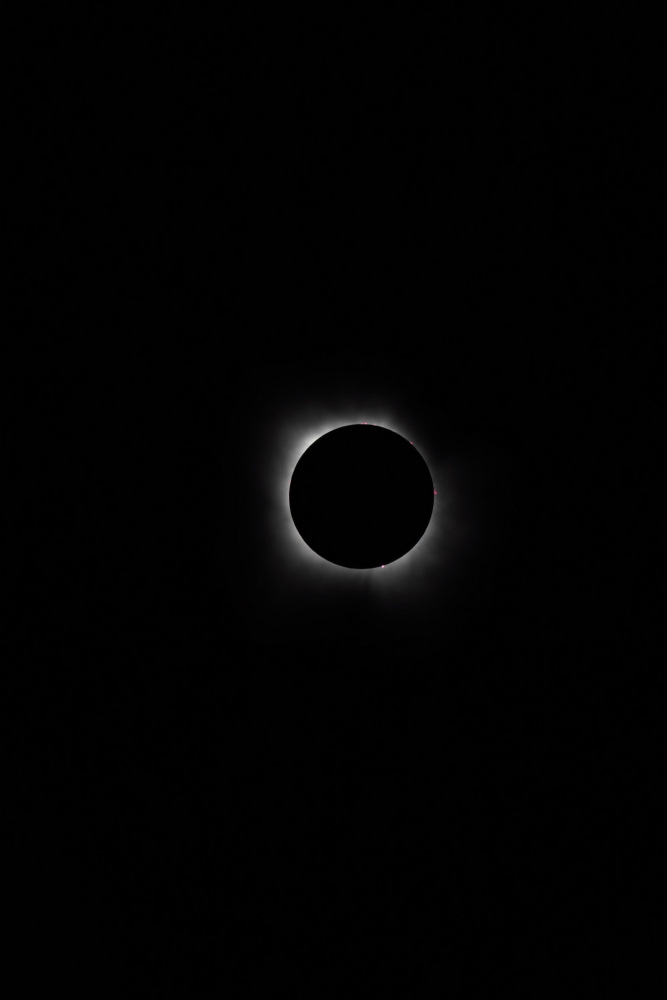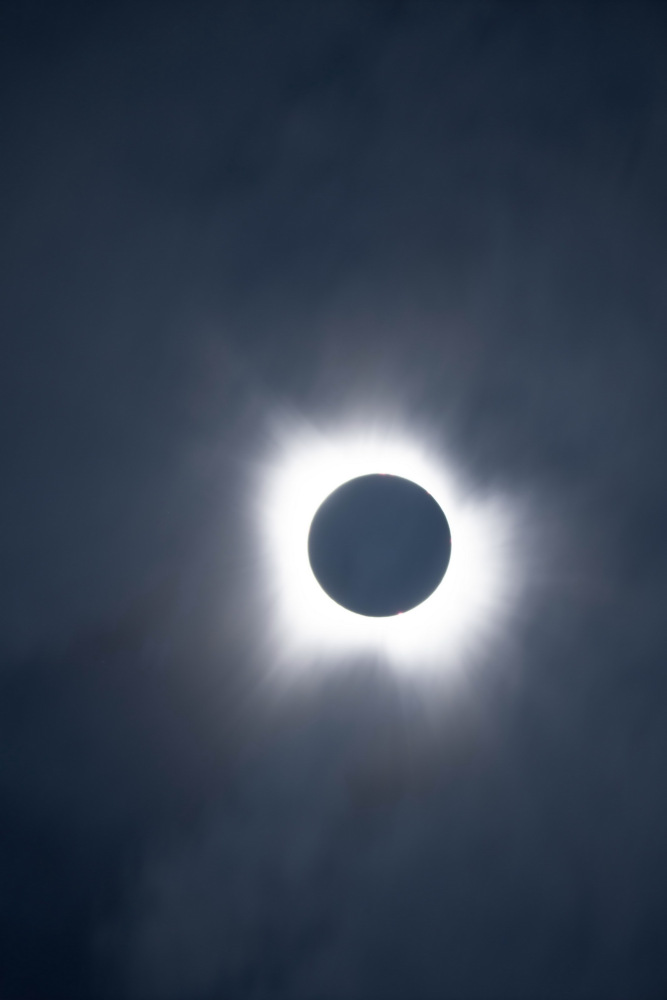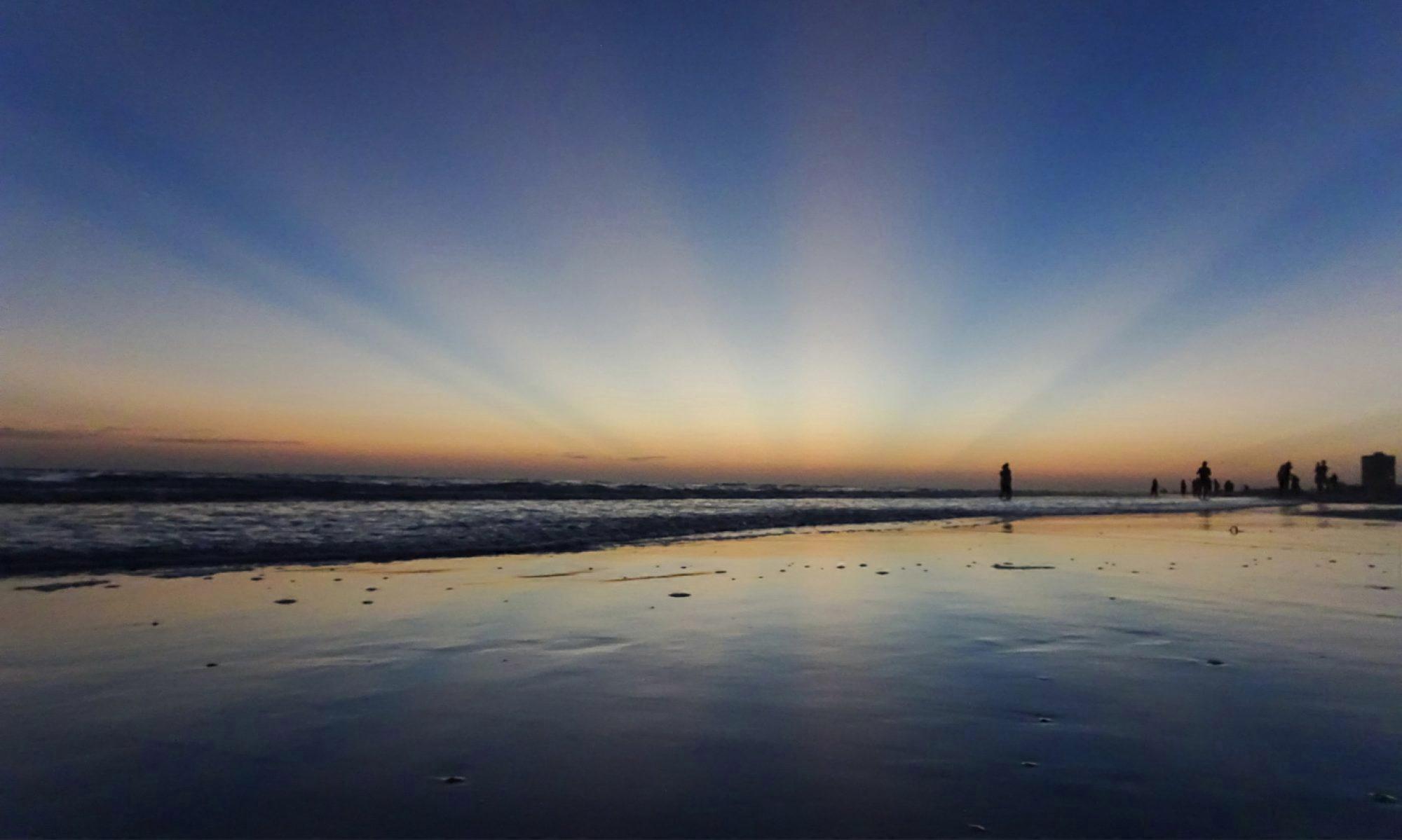

The main reason to travel to the US and go on a road trip to follow almost the entire golf coast from east to west was to see and photograph the total solar eclipse on April, 8th.
My plan was to image with a total of 9 cameras. Most of the cameras got a custom made (see my 3D design here: https://www.thingiverse.com/thing:2431974) flip-away solar filter, to facilitate the on and off during totality. As I was up to share my photos with the scientific community through the Eclipse Mega Movie project, like in 2017 (https://eclipsemegamovie.org/), I had some constraints to follow for my setup.
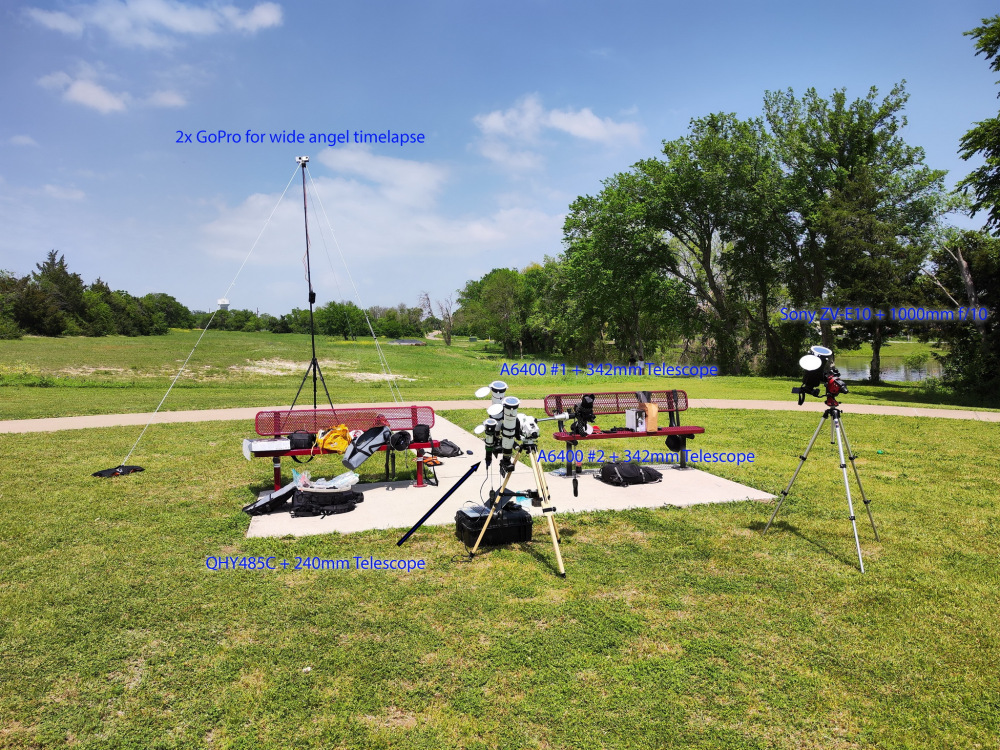
Therefore, the complete setup, which should be mounted on 4 independent tracking mounts, was:
- Sony A6000 full-specturm modified with 80/600mm APO
- Sony A6400 with 72/435mm APO for longer exposure sequences
- Sony A6400 with 72/435mm APO for shorter exposure sequences
- Sony A99ii with 35mm lens to capture the eclipsed sun with planets and hopefully a comet
- Sony A58 with 135mm lens
- Sony ZV-E10 with 100/1000mm maksutov
- QHY485C with 50/242mm APO for a totality video
- 2 GoPro cameras for scenery
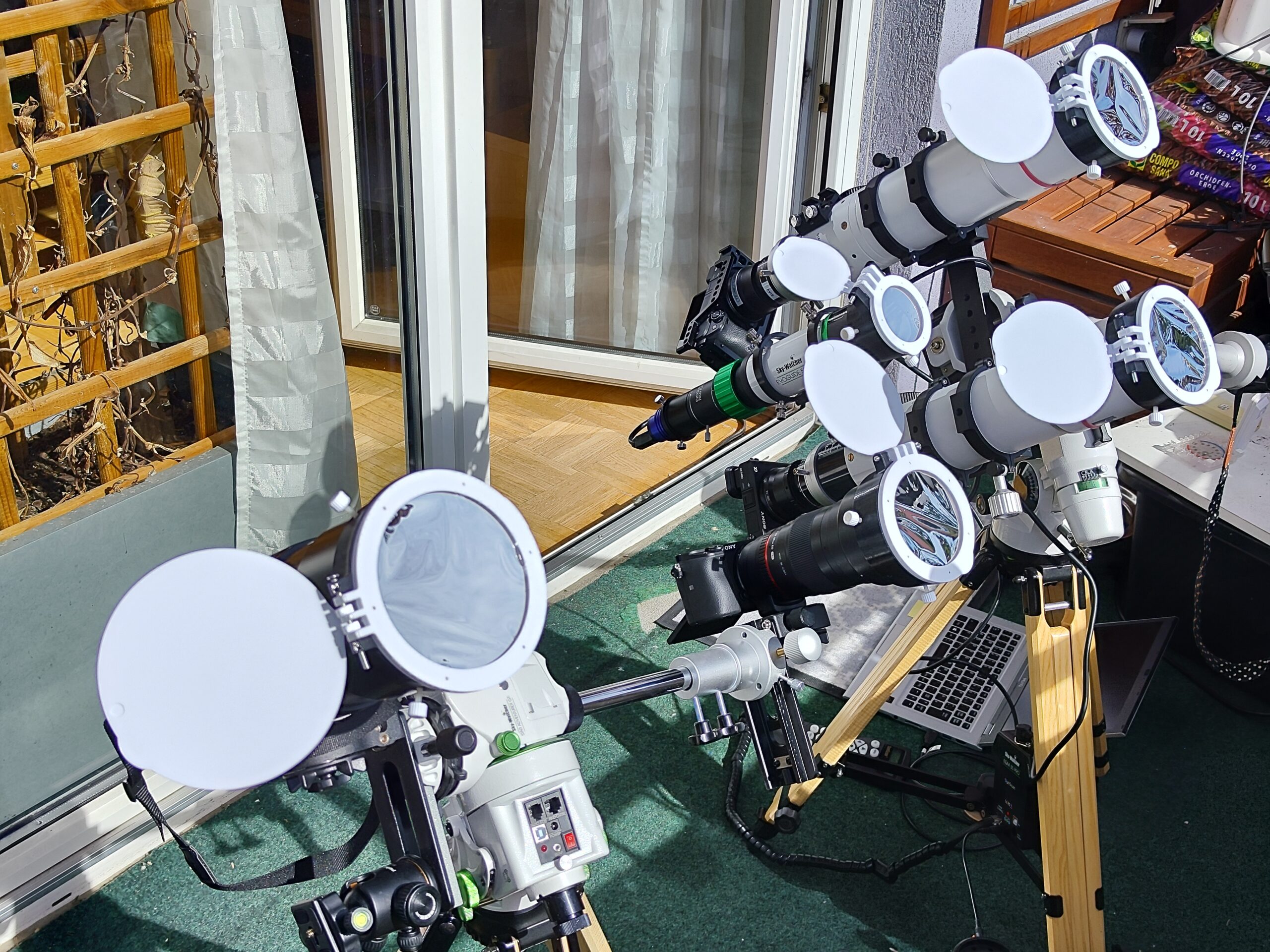
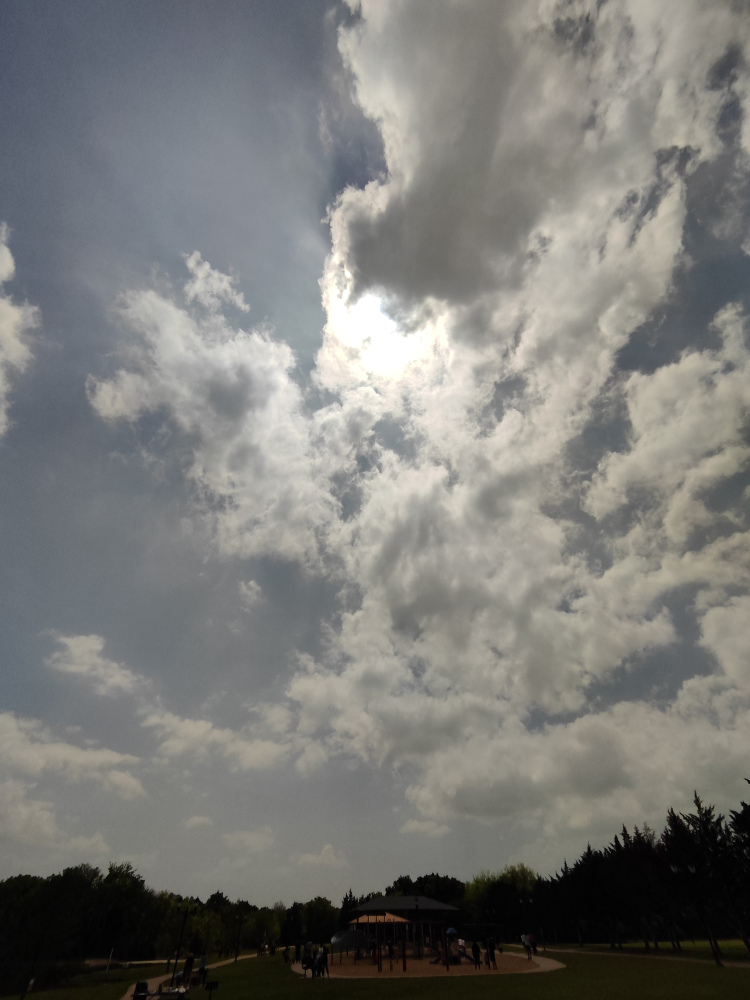
With bad luck, the airline was incapable of delivering one piece of luggage with my primary tracking mount within almost 3 weeks. Therefore I had to reduce the actual setup for the eclipse day in parts. Furthermore, it was quite unsure, whether observing the eclipse was even possible. A wide stretched cloud system covered large protions of Texas. In the morning, there was not even a patch of blue sky visible. Luckily, the clouds got less and less and even the one cloud covering the sun a few minutes before totality moved away. So we finlly could observe the eclipsed sun with an almost perfect sky. In the end I was able to record the required images, totaling to more than 400 GB of data.