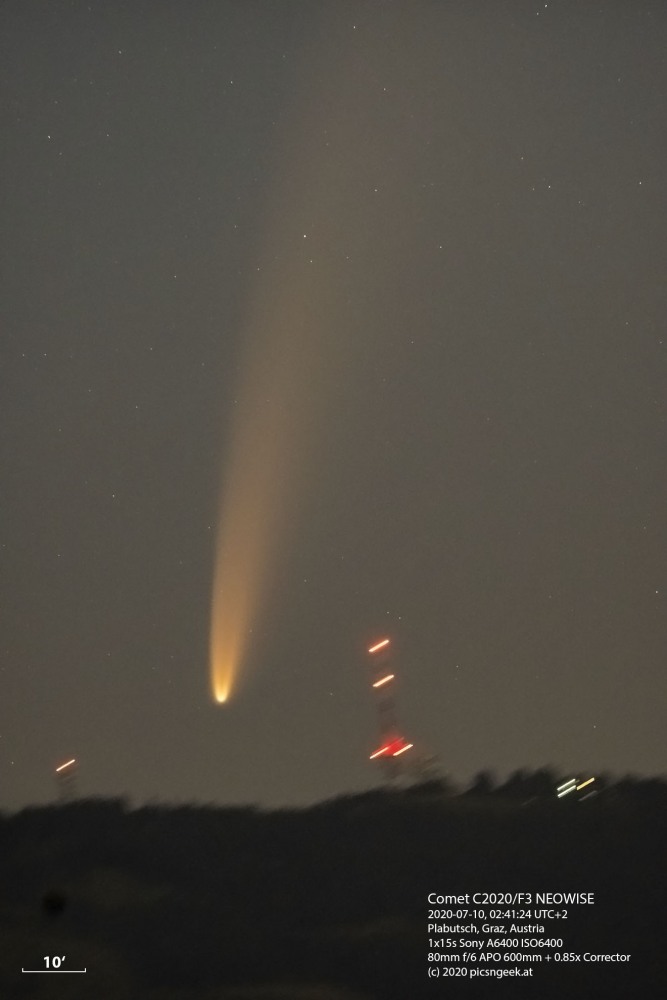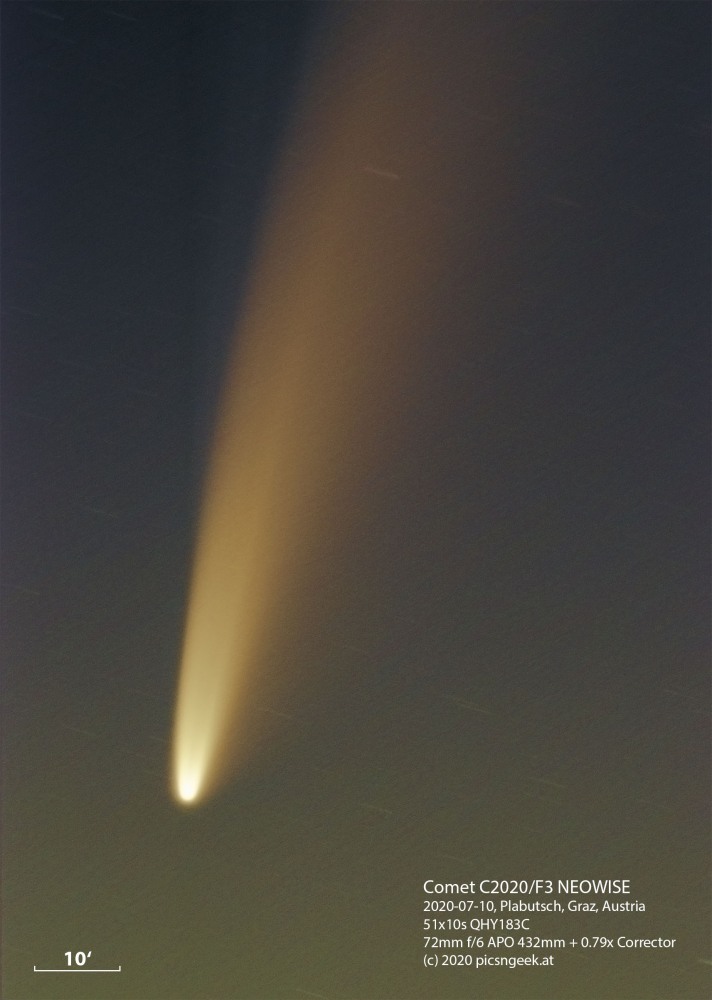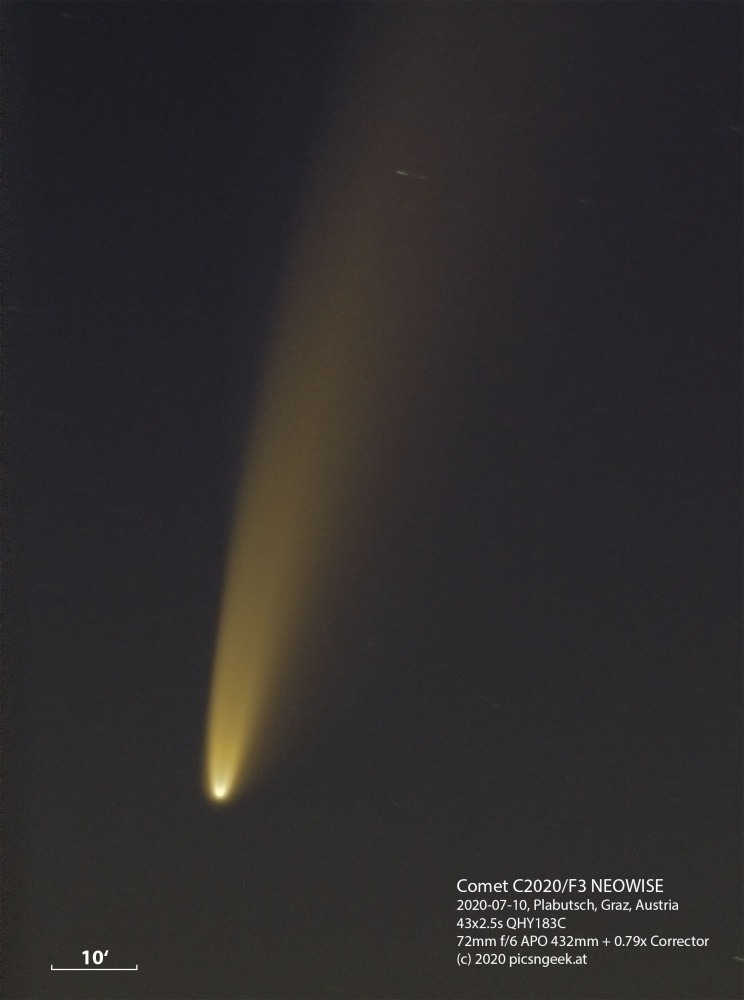

Comet C2020 F3 NEOWISE

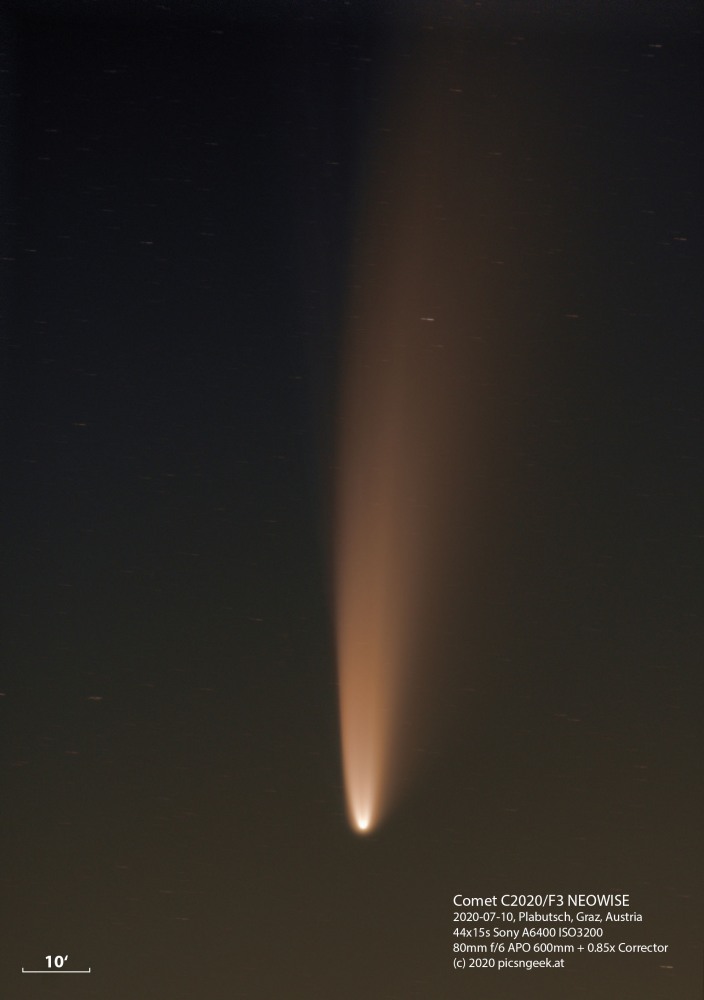
This years best view of a comet has finally been visible in my region. Weather conditions have been really favorable for a night time spectacle.
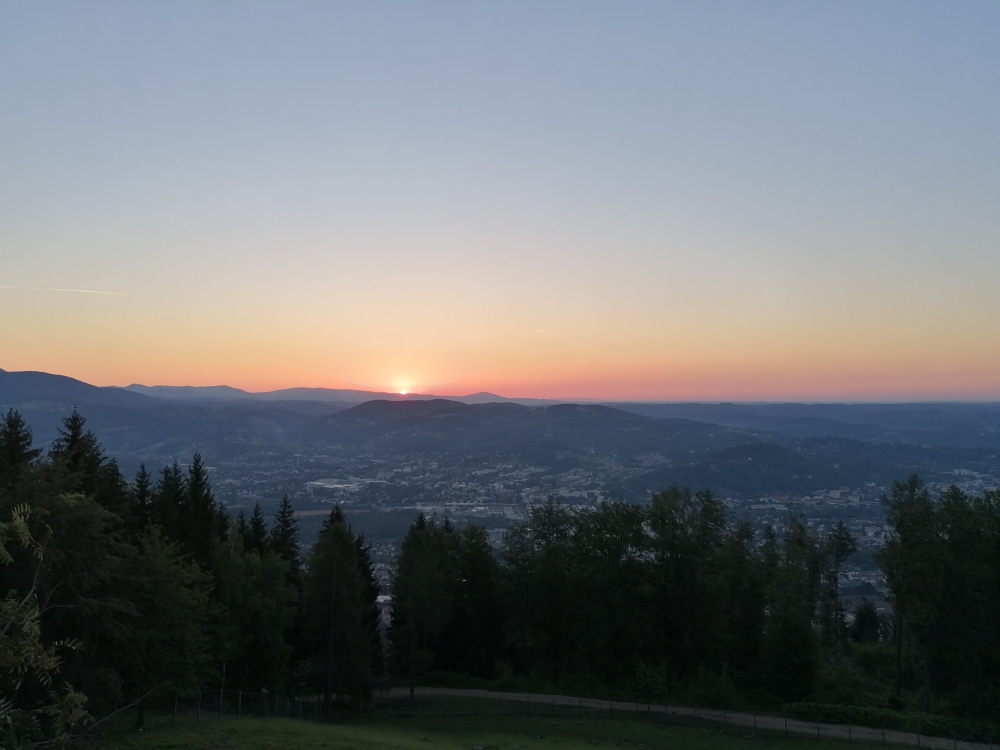
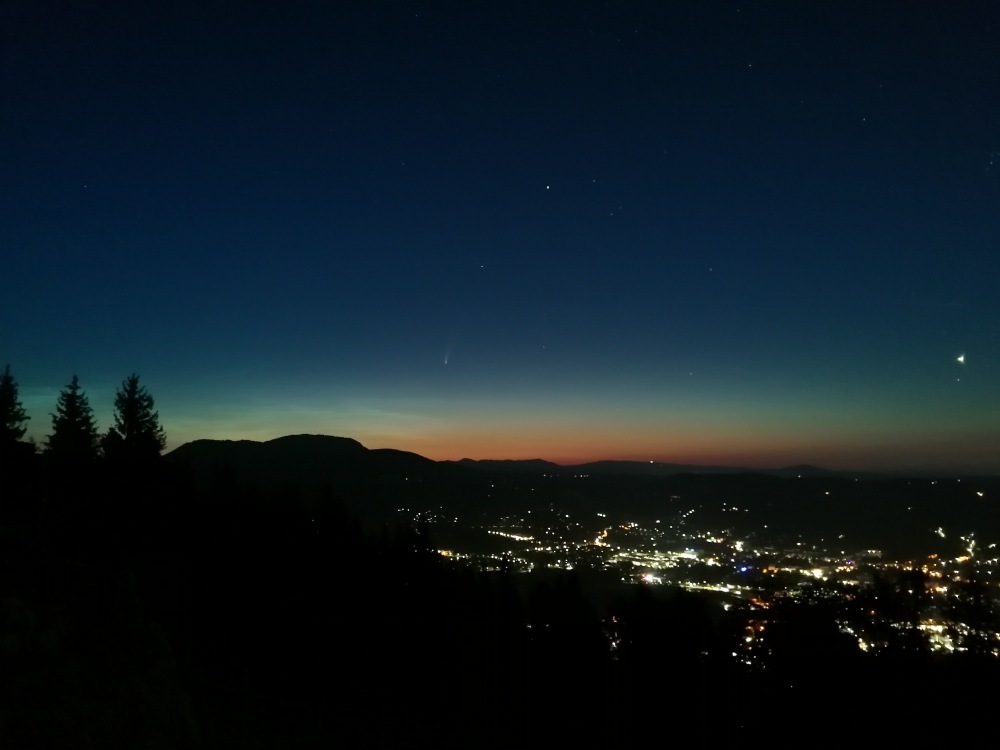
Combined with the setting across my home town Graz, viewing from top of Plabutsch (located at the eastern edge of Graz) permitted the comet to rise exactly next to the 2 antennas on the mountain top of Schöckl in 14km distance.

See how remarkably bright the comet is in the wider angle image below. This image was taken with a mobile phone camera! And the comet is clearly visible!

The timelapse video shows the comet rising at 02:38 CEST until mid of nautic twilight at 03:54 CEST. See the amazing pattern of the noctilucent clouds going in waves!

Comet C2020 F3 NEOWISE rising over mount Schöckl (1445m) near Graz, Austria

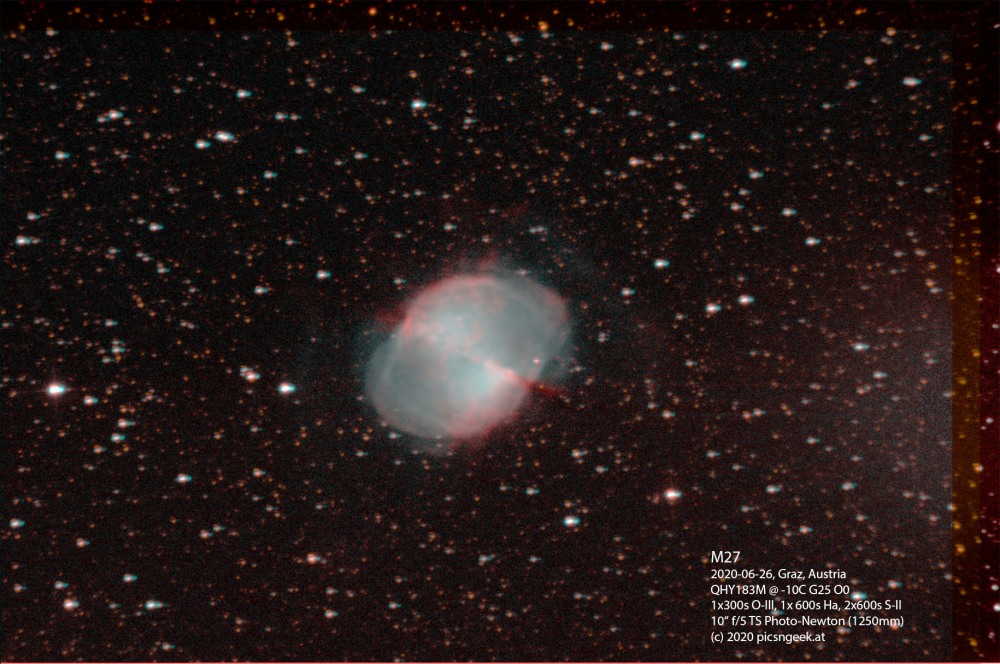
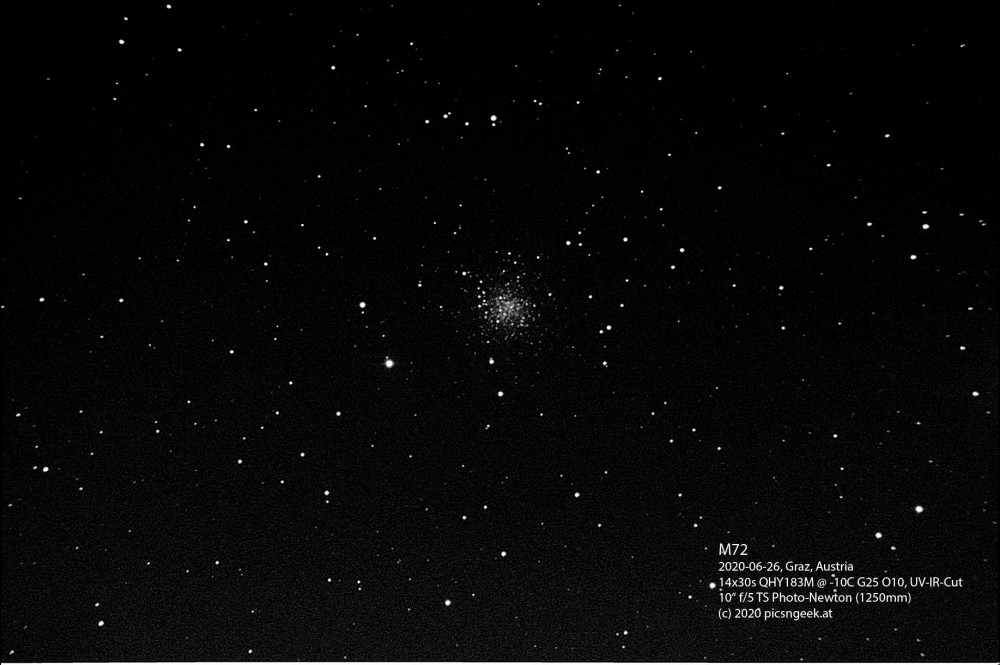
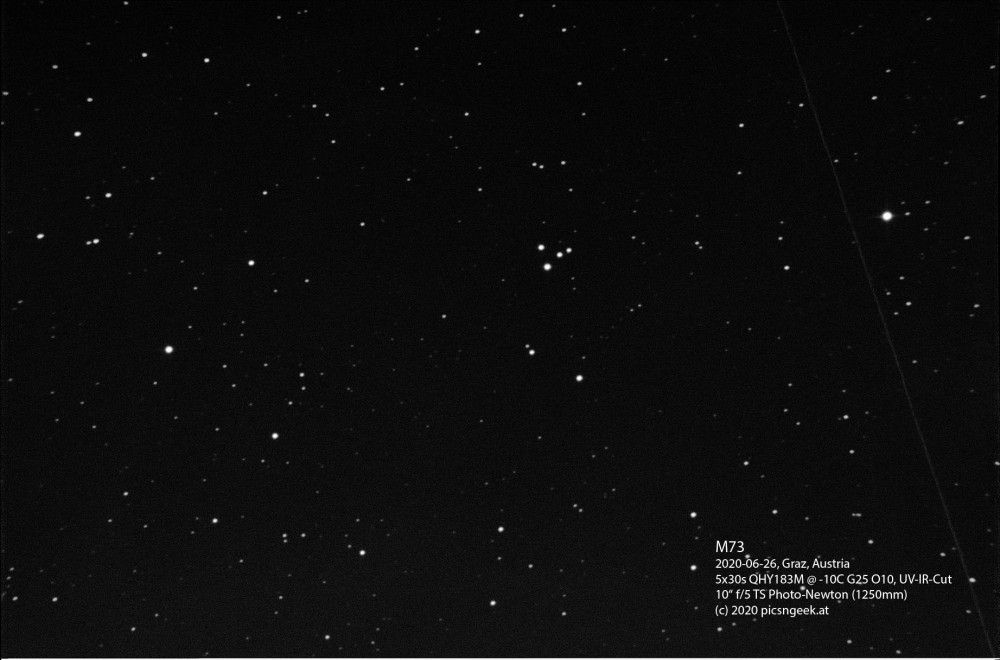
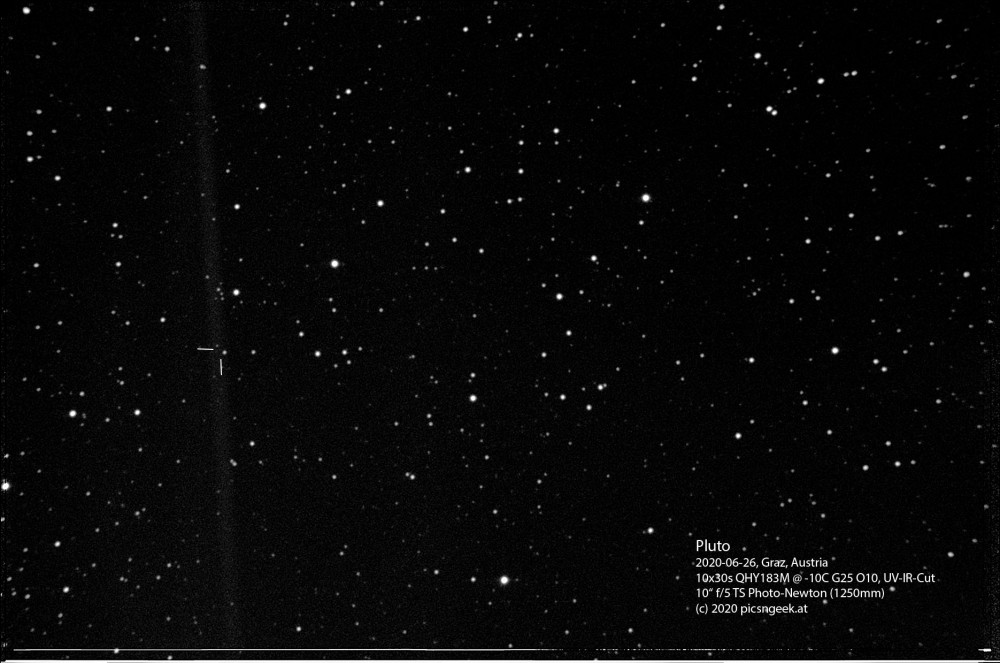
One night of Messier and Planet hunting at home

My limited view from the balcony is not the best for astronomy. I have approximately 120 degree east to west, facing south-east across the city. The maximum altitude i may see stars with the telescope is 74 degrees. Objects positioned low in the sky are blocked by the adjacent building up to 25 degrees. So I have access to only a smaller part of the sky, with typical Bortle 5-6 visibility.

Even though conditions seem to be unfavorable to setup a telescope…
– at times, I have all the planets in view
– the moon is a wonderful sight, even though the air above the city is far from stable
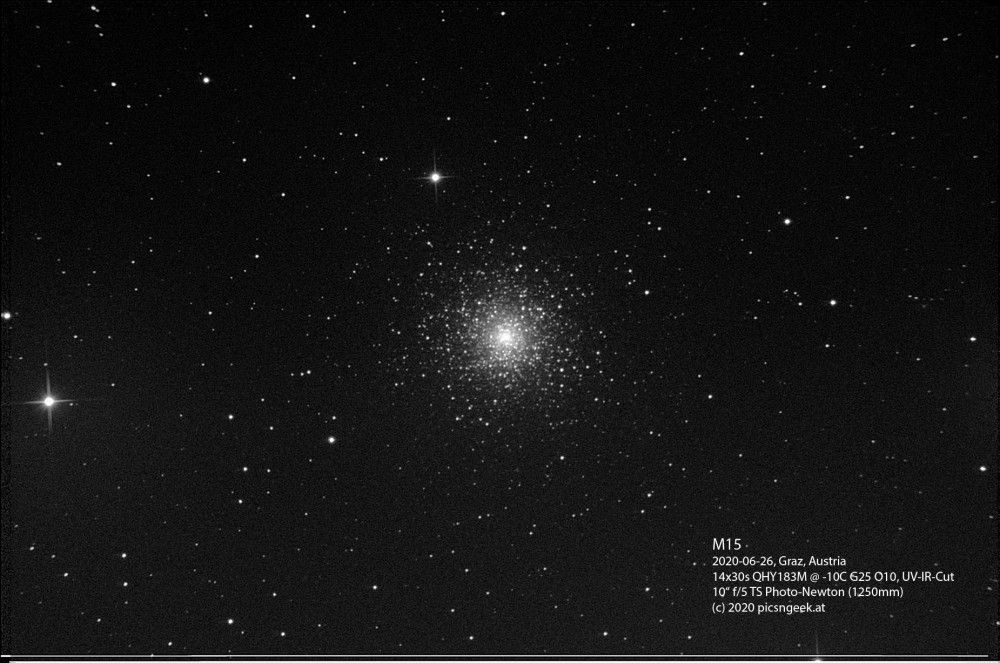
– several deep sky beauties come into view almost year round
– using light pollution filters work really well under these conditions
– I may view or image every night (time and weather permitting) without the hazzle of packing, driving an hour to one of the next darker sites, setting up, …

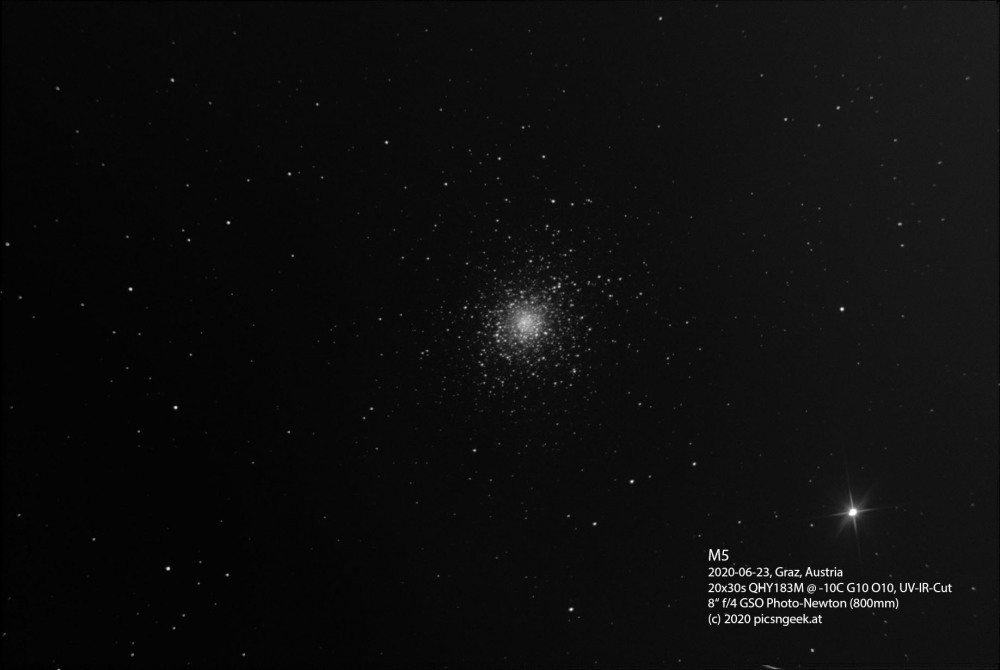
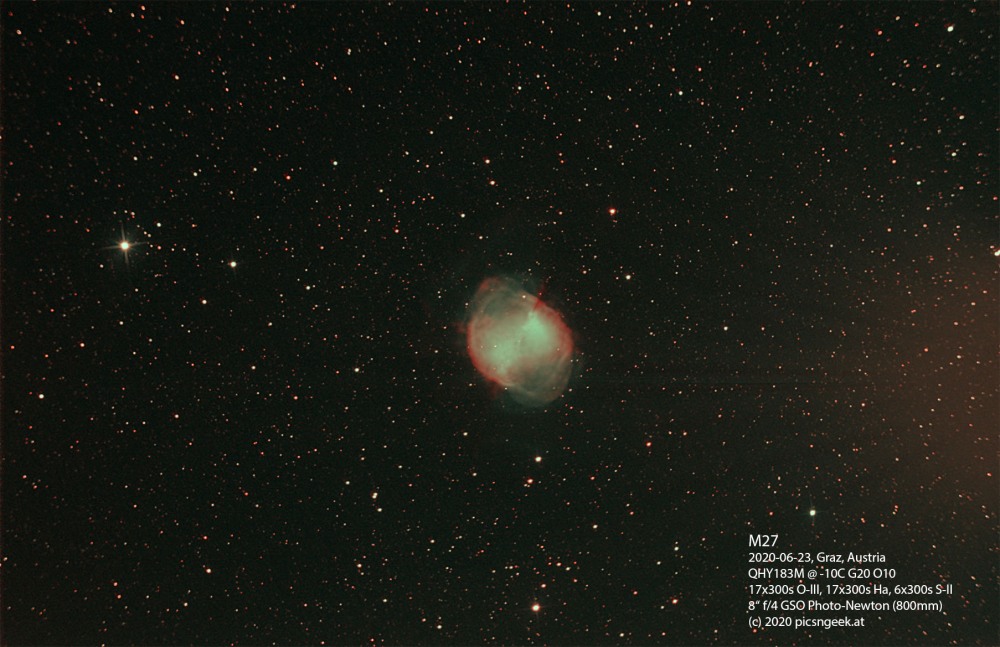
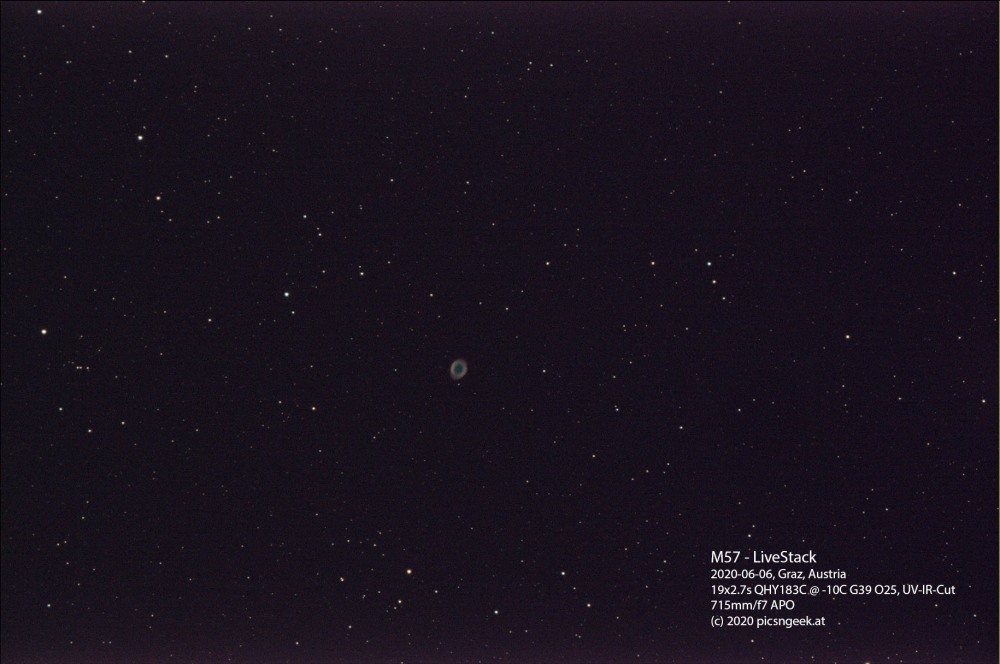
To proof that the night sky has still a lot to offer in light polluted urban places, I collected the images below in one single night, within less than 4 hours:

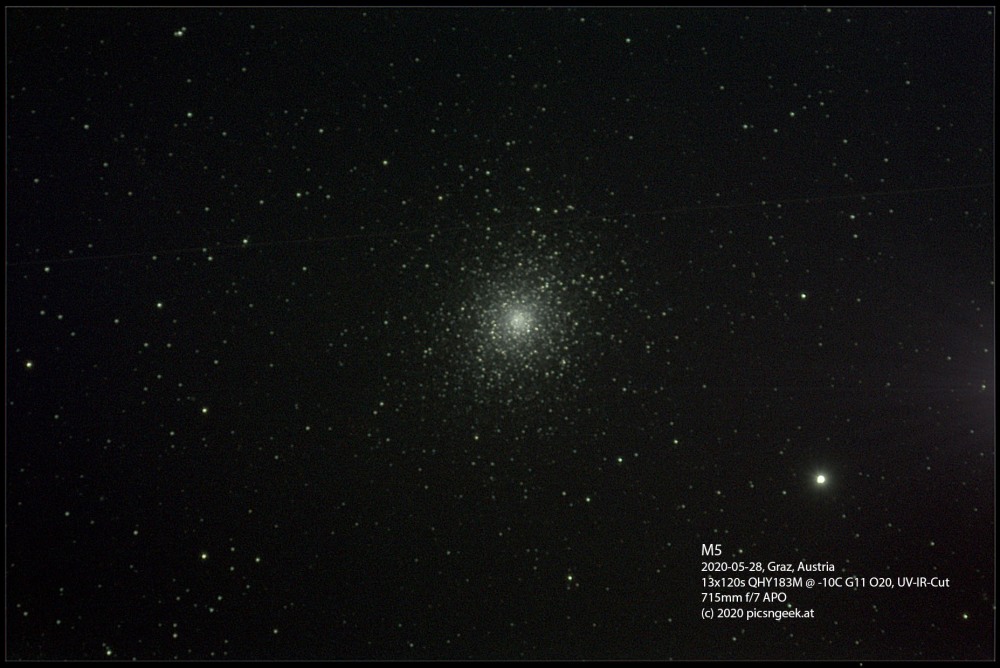
M5 globular cluster in different exposure settings

Speed of optics and exposure times have a great impact on the resulting image. Even though a higher quantity of individual exposures may improve the result, the total amount of photons collected is key.
The 715mm f/7 APO is significantly slower than the 800mm f/4 photo newton, the total capture time of 600s vs 1560s produces a significantly better result:

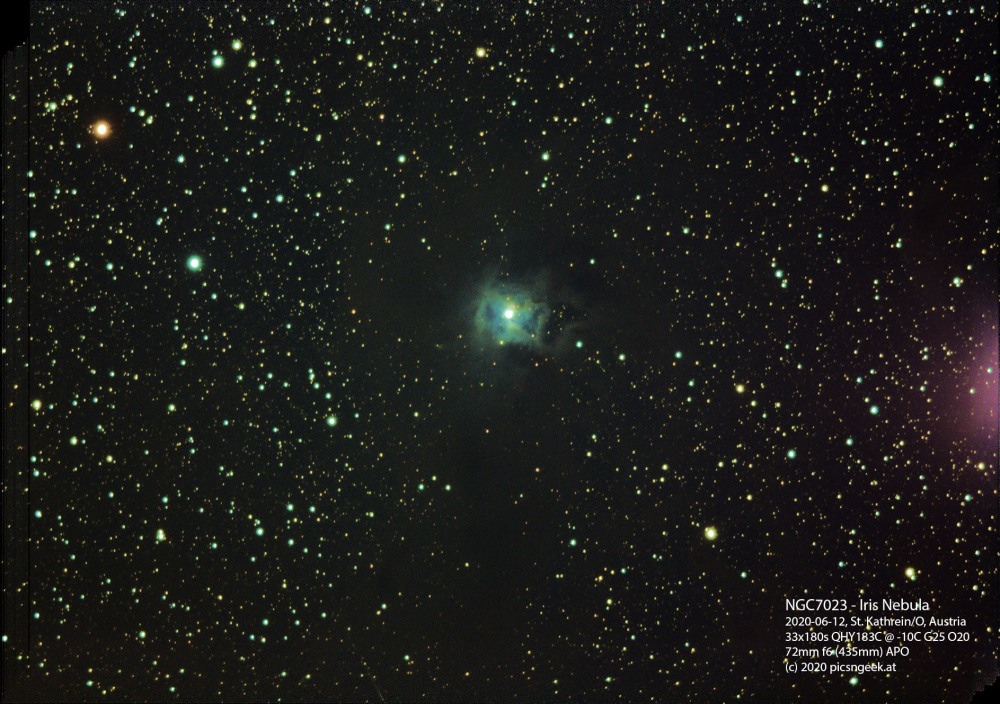
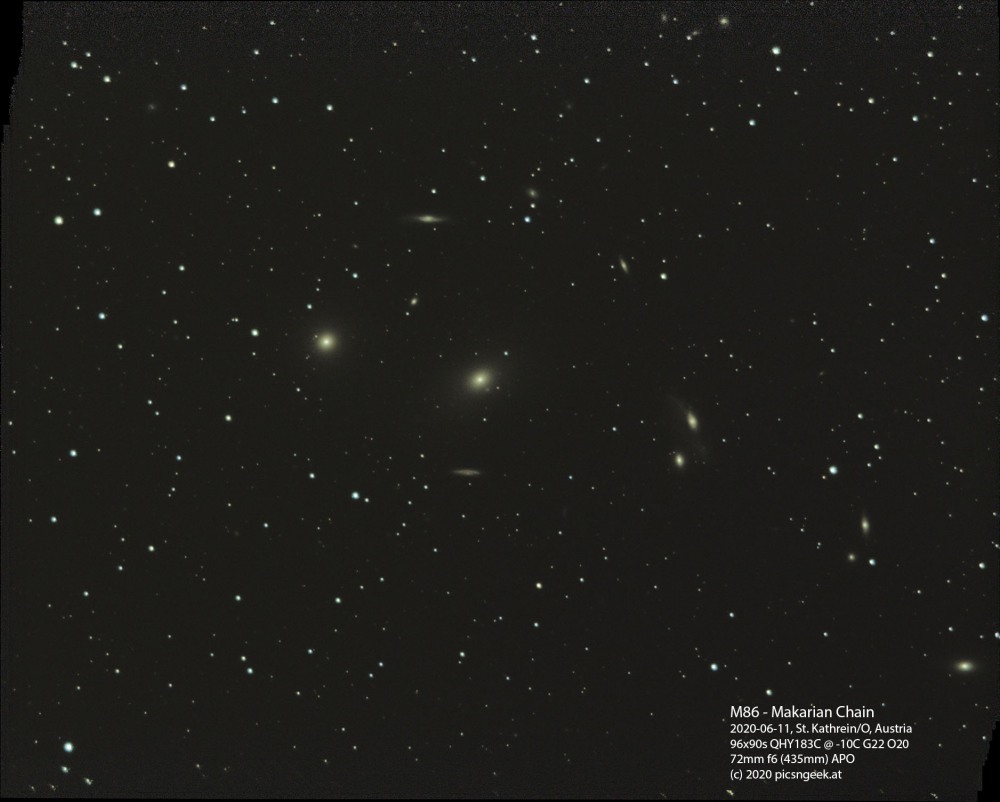
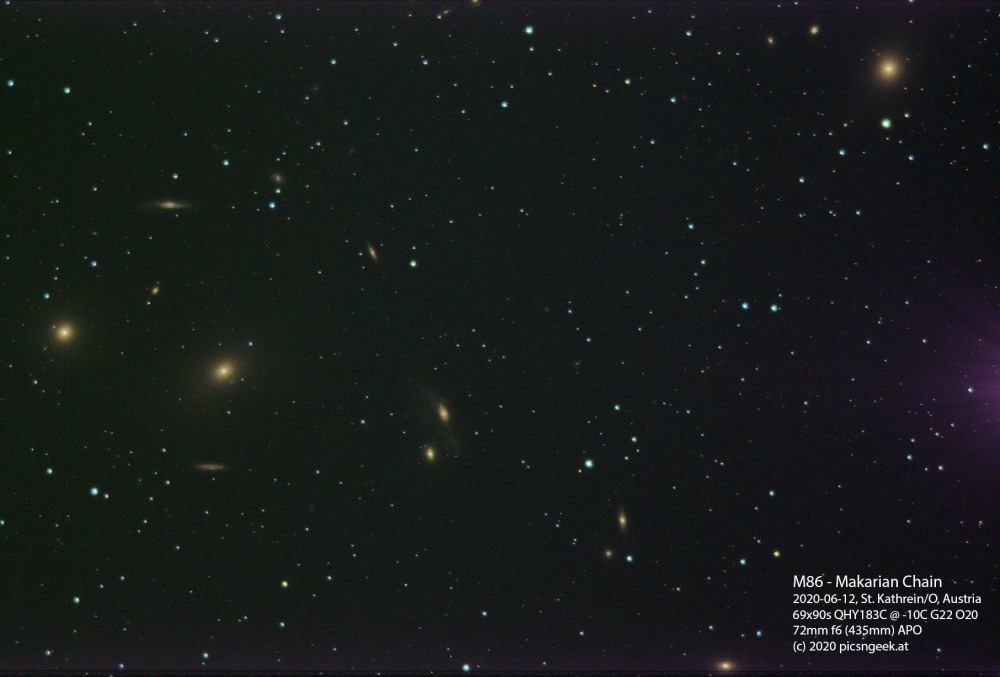
Makarian Chain and Iris Nebula

Even though the dark night in June is quite short, I could capture these images of Makarian Chain around M86 in Virgo and the Iris Nebula.
Images captured near Sommeralm, 30km north-east of Graz. Night sky still suffers from light pollution. The milky way was visible, but not crisp and clear.

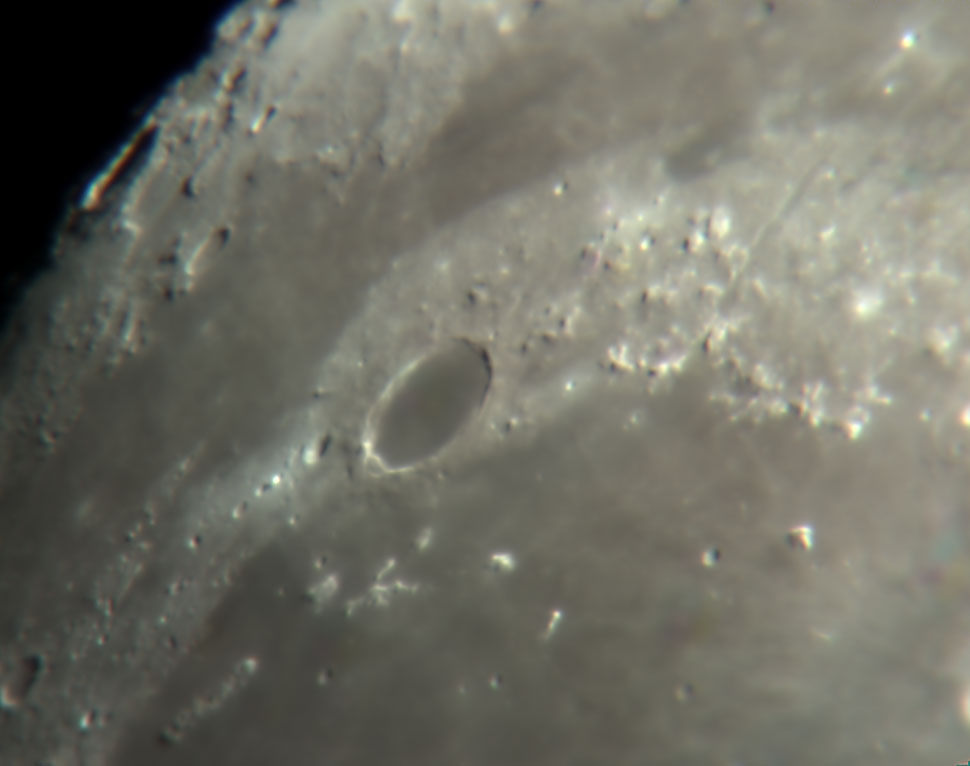
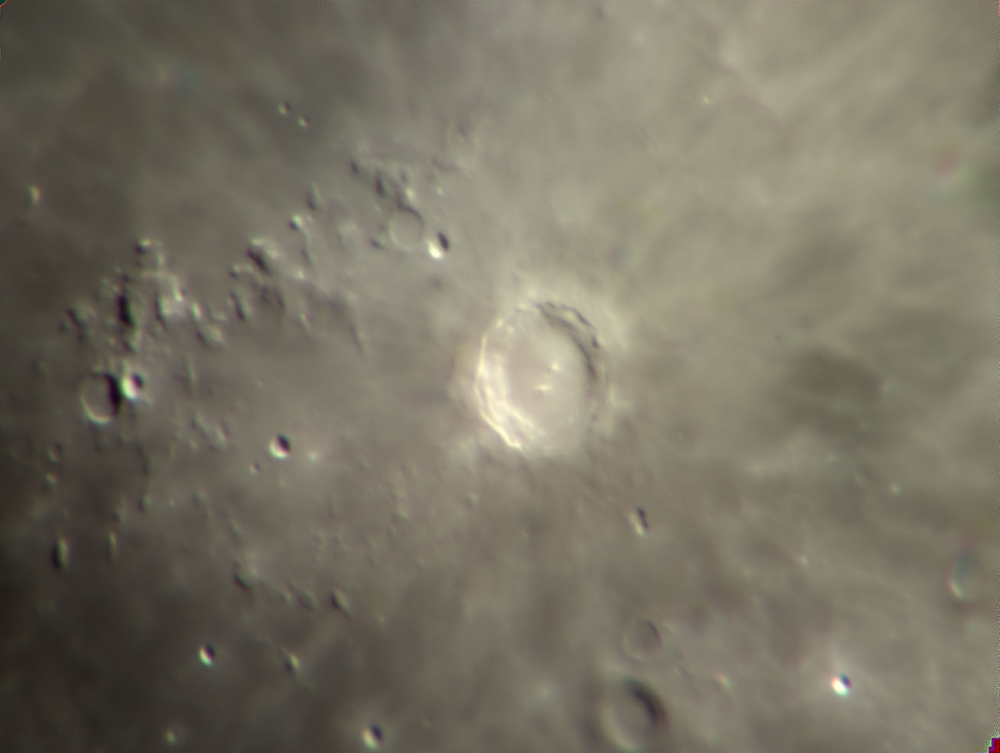
Found my planetary camera and tested on Moon

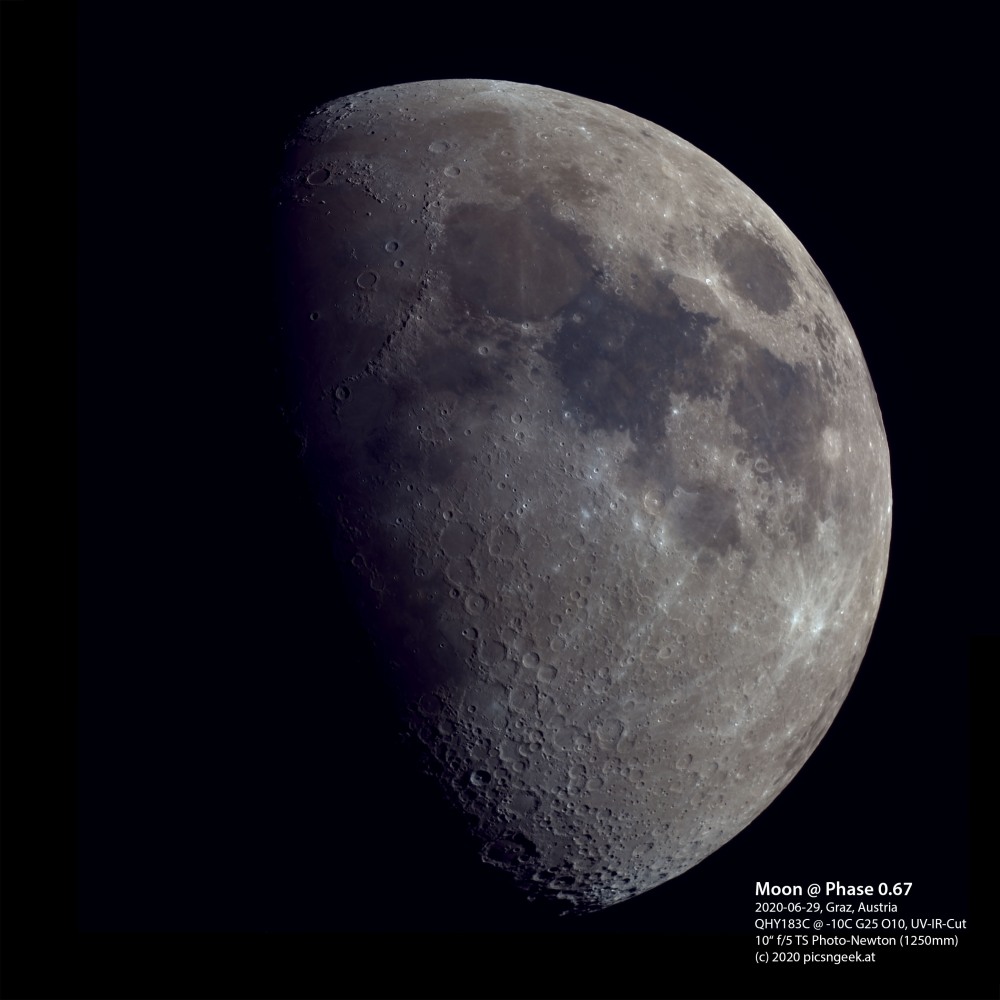
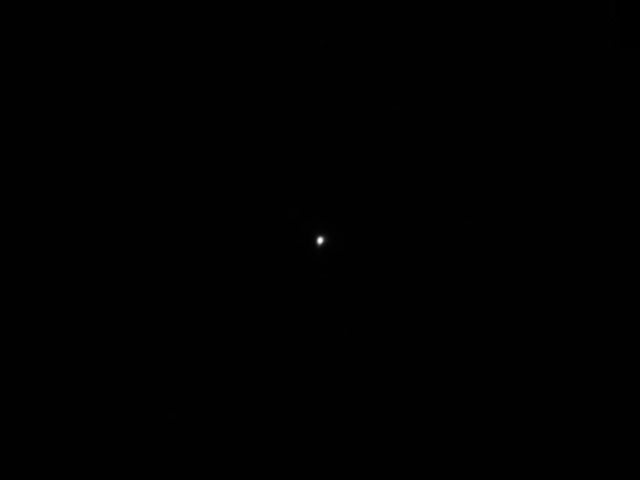
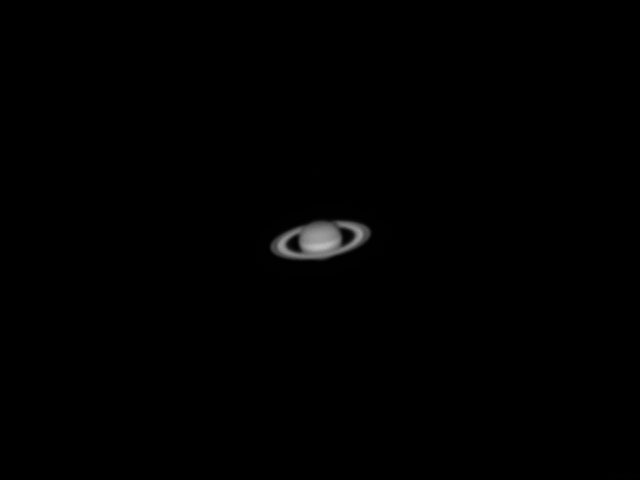
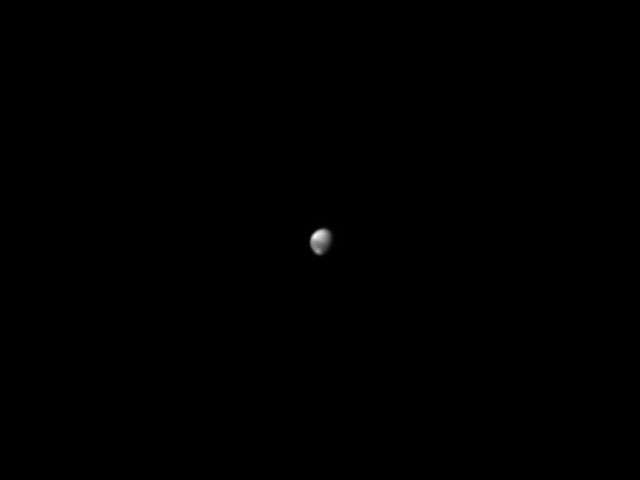
As the nights are really short right now, I set up my scope at home and took a look at the moon. Seeing was not too good, but in moderate magnification, the moon still was pleasant to look at. So I thought, I did not shoot the Moon or the planets for a while. Why not give it a shot? I took my my planetary camera which was stored in their box for more than 2 years and set up for imaging…

For the “first” results, I am really pleased. Now I think I have to optimize and go for it again soon 🙂

Image properties:
102mm f7 APO, ASI120MM-S, RGB+IR Filters
Copernicus: 10% of approximately 5000 frames
Plato: 10% of approximately 11000 frames

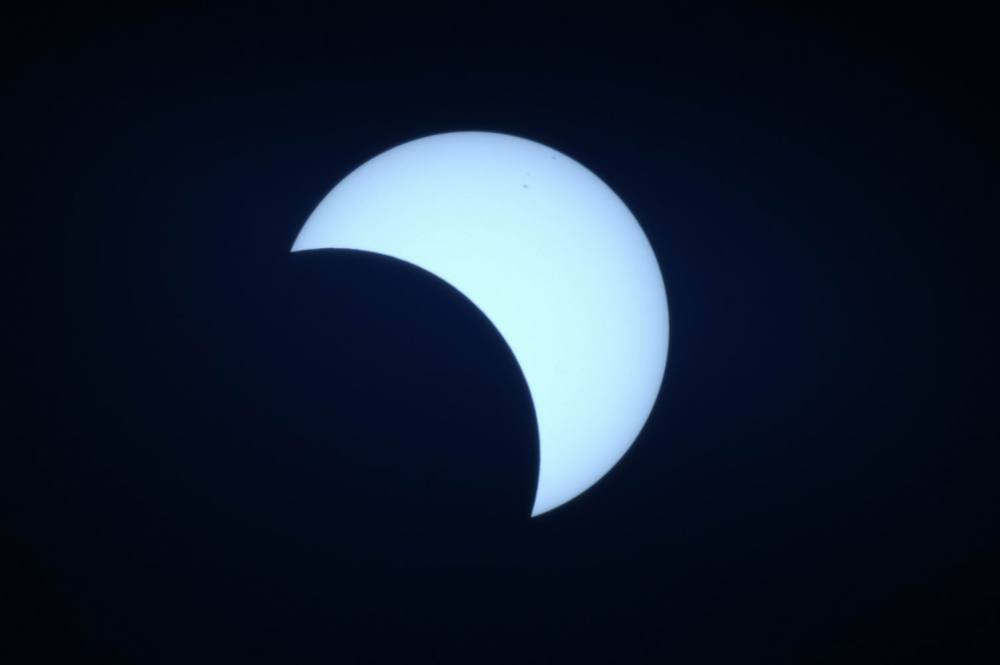
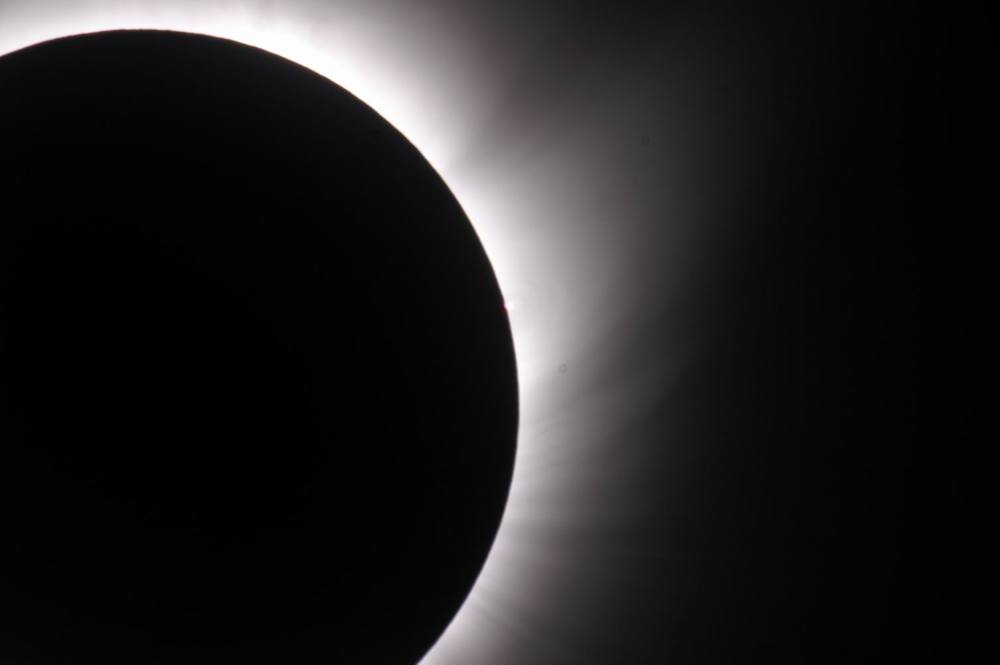
Total Solar Eclipse in Turkey 2026-03-29

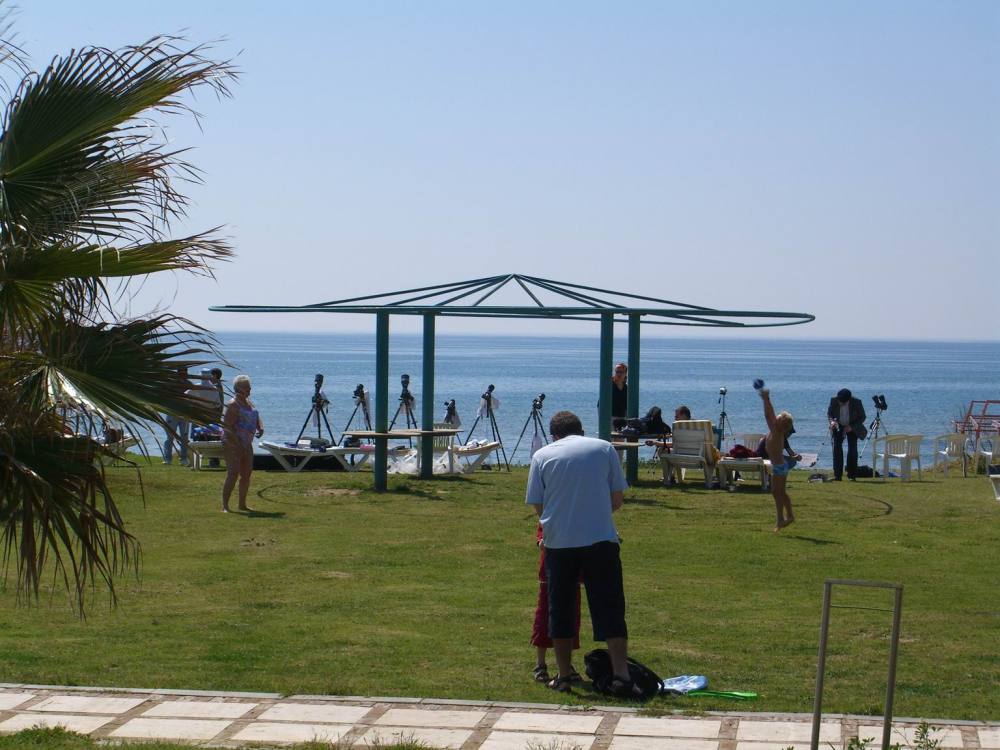
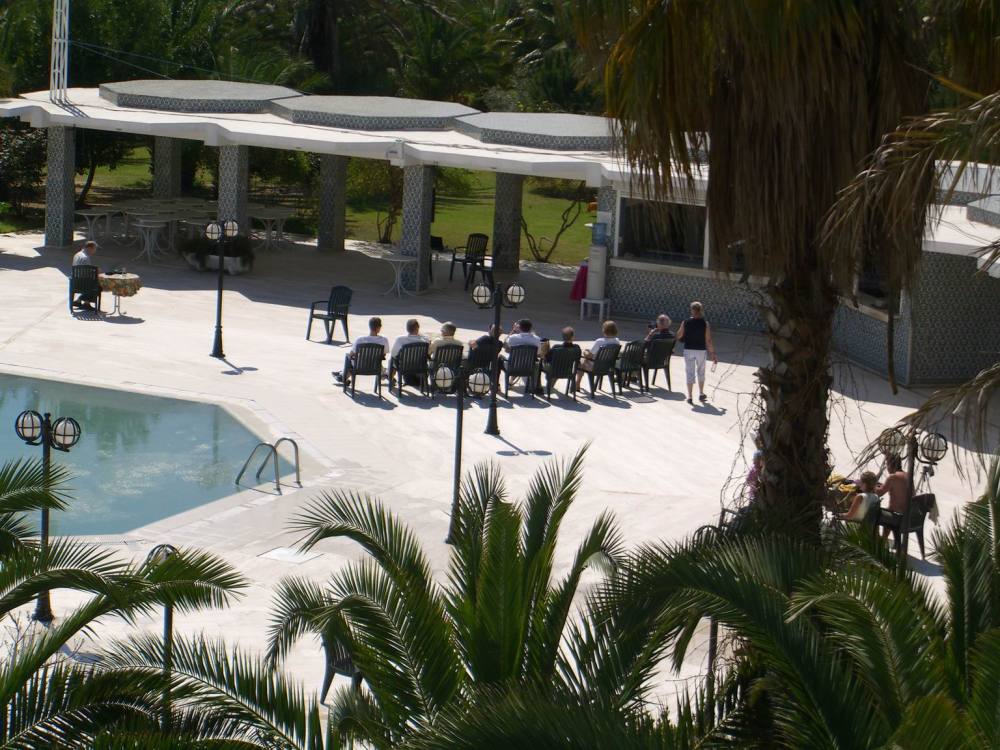
It has been a bit more than 6 years since I could see the total solar eclipse in Austria (11th August 1999), when I found an advert for an eclipse trip to Turkey for March 2006. The amateur astronomers from Viennese Astro-Station-Conrad organized this tour, where more than 300 enthusiasts and eclipsophiles participated and travelled to a hotel near Side. The holiday resort at the mediterranean sea was perfectly placed in the path of totality.

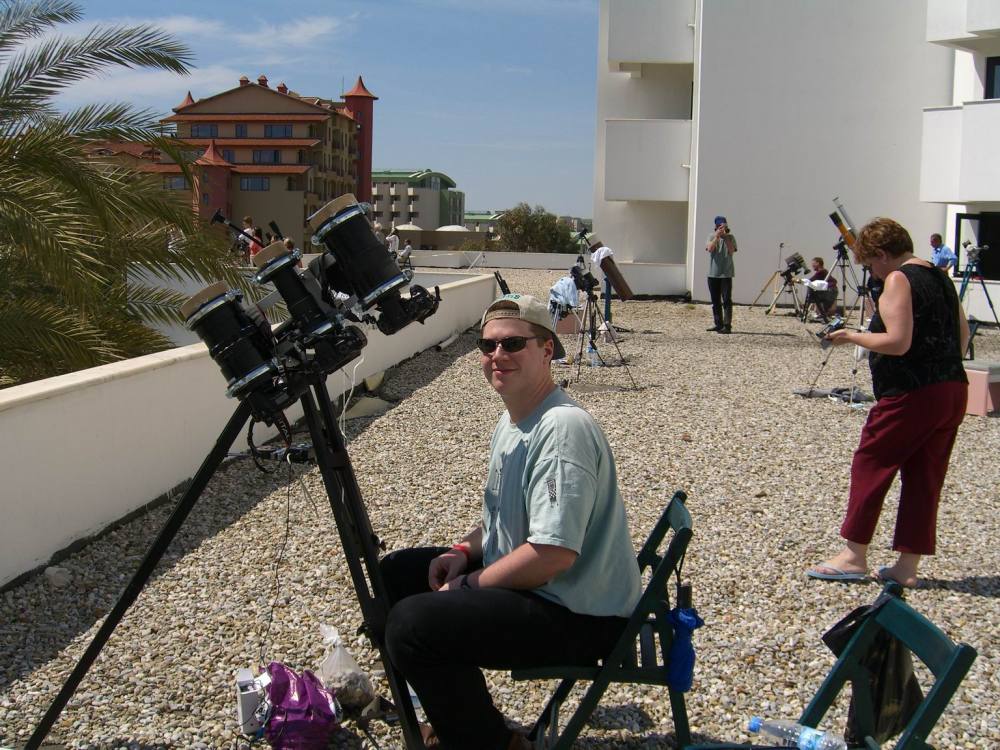
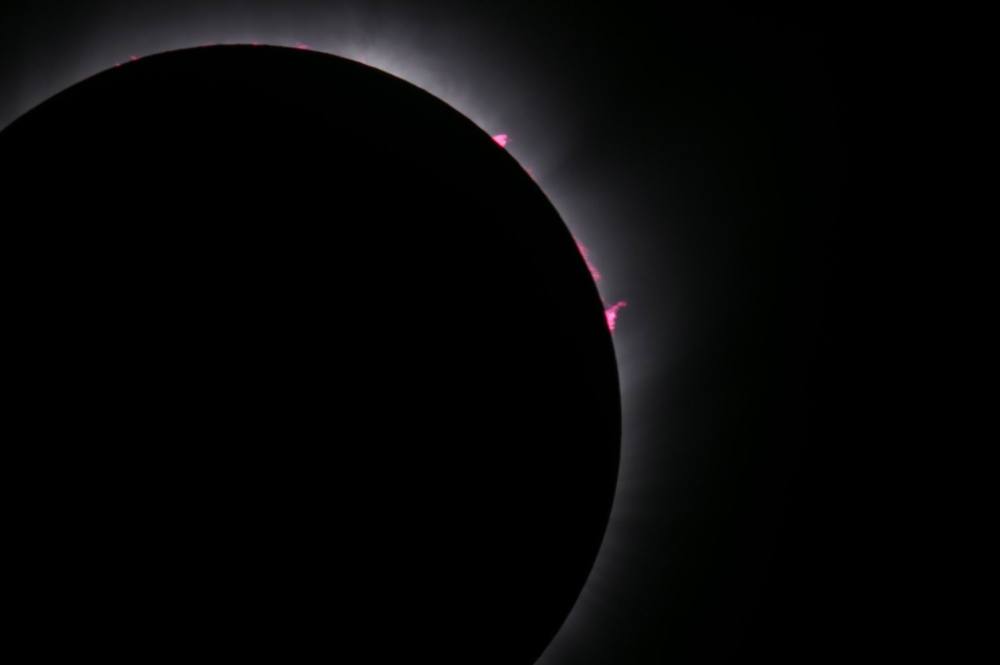
Since I first saw prominences through a telescope with hydrogen (H-alpha) filter, and results from the 1999 eclipse were mediocre (I only had a tripod and manual trigger), my dream was to capture prominences during the eclipse. For good results, a tracking mount is required. I onyl had a shaky EQ2 mount, which is built for telescopes with up to 4 kg. My initial plan was to use 2 cameras. Though I could further borrow a third camera as well as another mirror lens.

But how to mount these three cameras? I could not find a base supporting 3 cameras – especially none suitable to attach to the EQ2. I came up with an aluminium frame and pipe clamps from the hardware store. The contraption is definitely unconventional. The total weight put on the EQ2 is also way above the specified limits. Luckily, there were no major issues. Only the little motor struggled from time to time to keep the gear coupling.

The setup:

  • Minolta Dynax 7, Sigma 135-400mm f/4.5-5.6 DG APO @ 400mm
  • Konica-Minolta Dynax 7d, MC MTO 11CA (1000mm mirror lens)
  • Canon 20d, MC MTO 11CA

This site uses cookies. By continuing to use the site (including navigation and scrolling), you agree to the use of cookies. more information

The cookie settings on this website are set to "allow cookies" to give you the best browsing experience possible. If you continue to use this website without changing your cookie settings or you click "Accept" below then you are consenting to this.

Close